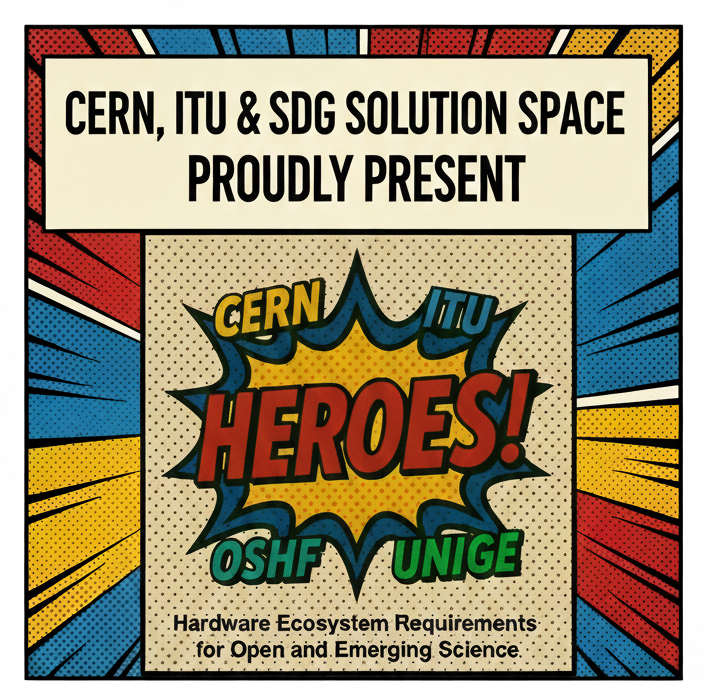
HEROES: Hardware Ecosystem Requirements for Open and Emerging Science
In a landmark collaboration between CERN, ITU, and the SDG Solution Space, the HEROES workshop (held January 19-21) brought together global experts to define the future of open research tools.
Celebrating the 10th anniversary of the Gathering for Open Science Hardware (GOSH), this event focused on how Open Science Hardware (OSCH) can become a ubiquitous solution for global research, specifically driven by Artificial Intelligence and Citizen Science.
Industry Insights:
The conversation has continued beyond the event, with Seeed Studio recently highlighting the workshop’s impact. Their team contributed expertise on how edge AI sensing and rapid prototyping tools are helping communities move from theory to field-ready solutions. They are also actively supporting the next steps by sponsoring hardware for researchers working on the SDGs and Open Science.
Workshop Priorities
The workshop centered on four critical pillars to advance the movement:
- Integration: Embedding OSCH into institutional strategies and funding models.
- AI & Physics: Defining standards at the intersection of AI and physical tools.
- Sustainability: Developing new economic models and procurement practices.
- The Movement: Centering open hardware within the broader global open science movement.
Key Outcomes
The initiative is set to produce tangible roadmaps for the coming years, including:
- Official Policy Papers and a comprehensive Event Report.
- A detailed Ecosystem Map of OSCH.
- Priority setting for the decade of 2026–2036 and the upcoming UN Open Source Week
Seed studio also published an article about HEROS – read it here